Key takeaways
- Porto suits Americans who want city life all year: a metro, universities, major hospitals and the most direct flights to North America.
- The Algarve suits people who want sun, beaches and outdoor living. It gets about 455 mm of rain a year against Porto’s 1,147 mm.
- Porto city rents more per square meter, but buying in Loulé or Lagos costs more than buying in Porto. Algarve asking rents rose sharply in 2026.
- Both regions have about 167,000 foreign residents. The Algarve’s community is more concentrated and its towns are much quieter in winter.
- The visas are identical in both regions, so choose on lifestyle, and rent before you buy.
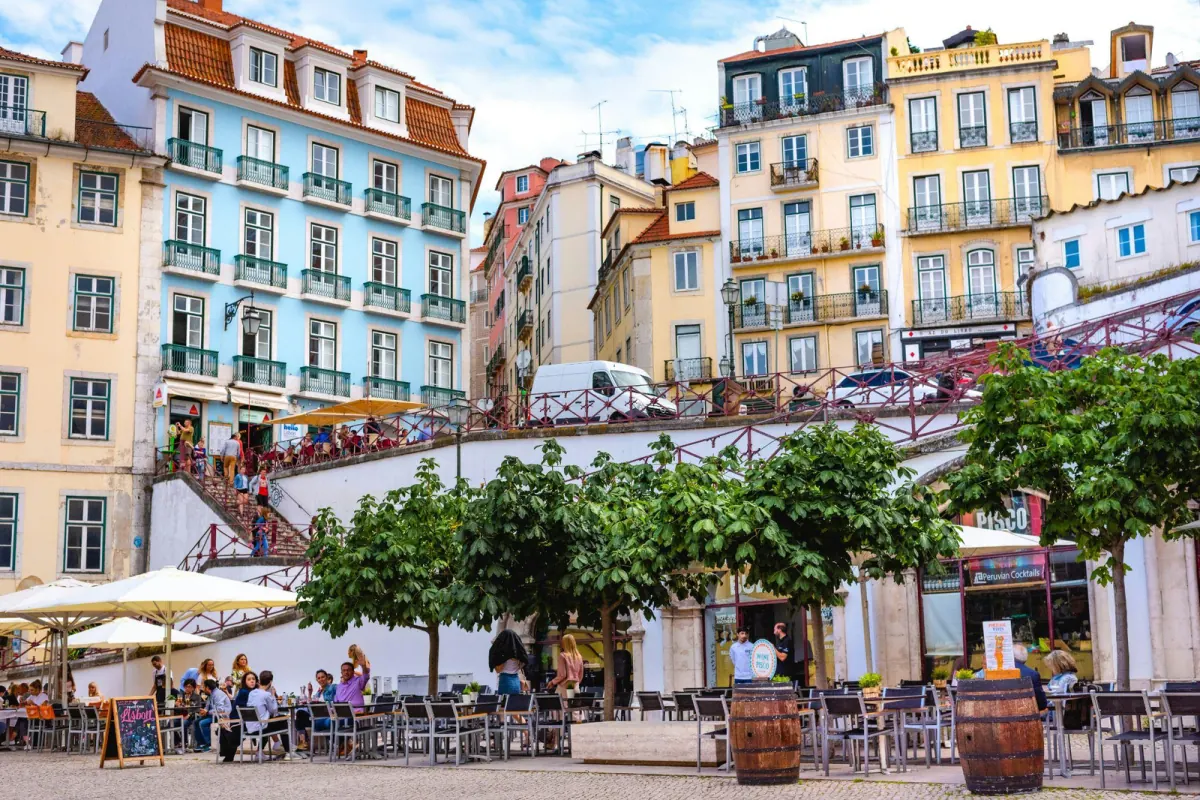
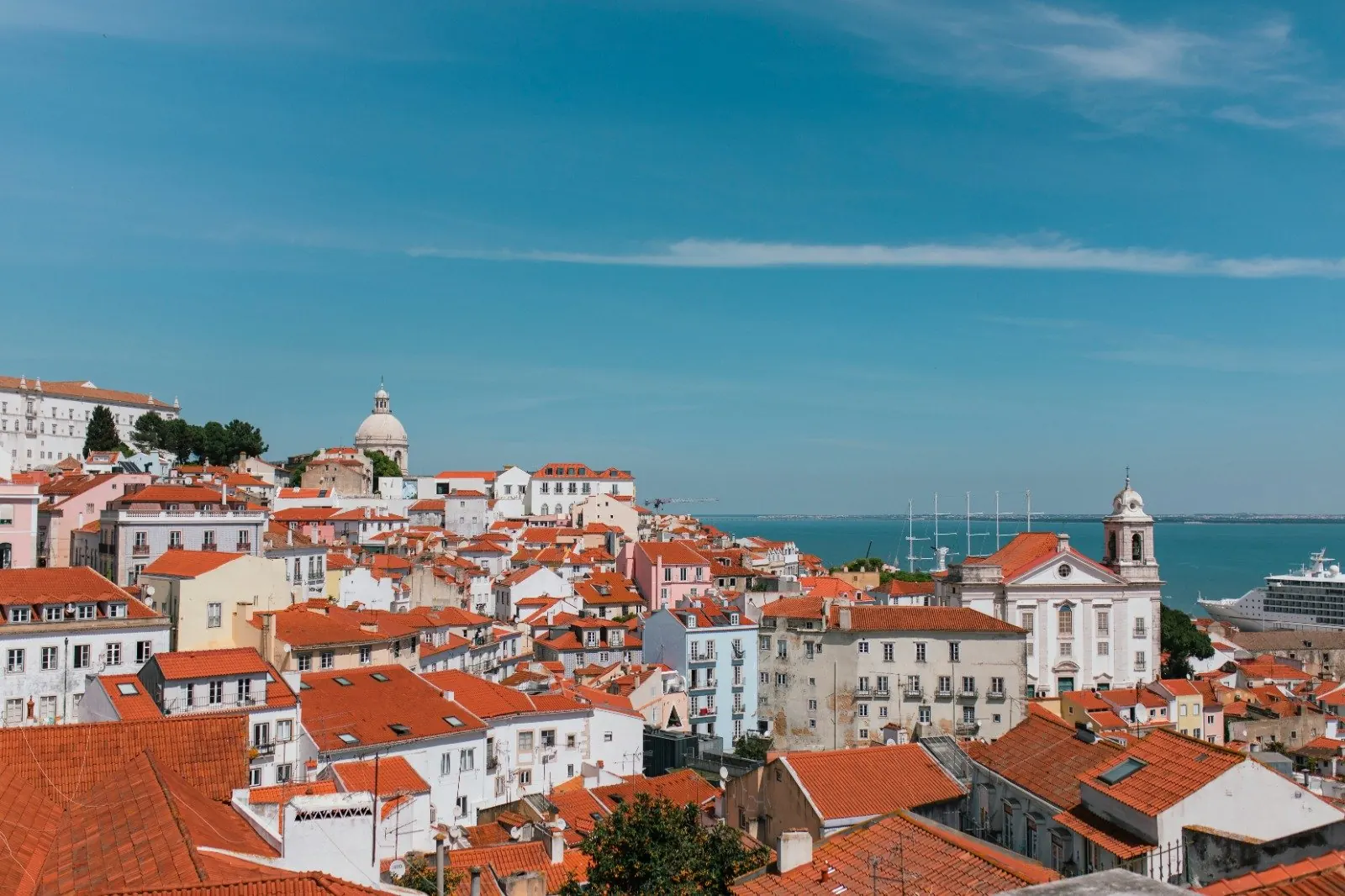
Porto and the Algarve are two of the most popular places for Americans to settle in Portugal, yet they can feel like different countries. Porto is a working city on the Douro river with a metro, universities and a growing international scene. The Algarve is Portugal’s southern coast of beaches, cliffs and small towns, with the country’s highest share of foreign residents.
This guide compares them on what matters most when you’re moving from the United States or Canada: housing costs, climate, flights home, healthcare, schools, getting around and community. The figures come from Portugal’s statistics office (INE), its weather service (IPMA) and its immigration agency (AIMA), with sources listed at the end.
The short version: choose Porto if you want city life all year, good public transport and the best flight connections to North America. Choose the Algarve if sunshine, beaches and an outdoor, slower lifestyle come first and you’re happy to drive.
Porto vs Algarve at a Glance
| Porto | The Algarve | |
|---|---|---|
| Median rent on new leases (Q2 2026) | €14.66/m² (Porto city) | €11.56/m² (region) |
| Median home sale price (Q2 2026) | €3,846/m² (Porto city) | €3,500/m² (region) |
| Average high, January / July | 14.0°C (57°F) / 24.3°C (76°F) | 16.3°C (61°F) / 29.4°C (85°F) |
| Rainfall per year | 1,147 mm (45 in), about 105 rainy days | 455 mm (18 in), about 49 rainy days |
| Nonstop flights to North America | Year-round and seasonal routes | Seasonal routes, mainly in summer |
| Getting around | Metro, trains and buses; car optional in the city | Regional train and buses; car usually needed |
| Foreign residents (district, end of 2025) | 167,498 (Porto district) | 167,124 (Faro district) |
| Best for | City life, families with school-age children, working professionals | Beach and outdoor living, retirees, people who want warmth |
Housing Costs: Renting and Buying
Renting
Porto city has the higher rents. In the second quarter of 2026 the median rent on newly signed leases was €14.66 per m² in Porto, against €11.56 per m² across the Algarve and €10.17 nationally. Smaller homes cost more per square meter in both. For a studio or one-bedroom the median was €16.77 per m² in Porto and €13.68 in the Algarve. For a two-bedroom it was €13.05 and €11.18.
As an illustration, a 70 m² two-bedroom apartment at those medians works out to roughly €910 a month in Porto and €780 in the Algarve. Your actual rent will depend on the neighborhood, condition and whether the home is furnished.
Within each region the spread is wide. Across the river from Porto, Vila Nova de Gaia’s median was €11.11 per m² in Q2 2026, and Matosinhos, on the coast, was €12.80. In the Algarve, INE’s 2025 annual figures put Lagos at €12.37 per m², Loulé €11.95, Albufeira €11.43, Tavira €11.30 and Faro €9.67.
Asking rents for new listings tell a more volatile story. Idealista’s index for July 2026 had Porto city asking rents at €18.1 per m², down 11.5% year on year, while asking rents in the Faro district were €22.5 per m², up 34.3%. Expect stiffer competition for good long-term rentals on the Algarve coast, especially in spring and summer.
Buying
Buying flips part of the picture. The median price of homes sold in Q2 2026 was €3,846 per m² in Porto city and €3,500 per m² across the Algarve, against €2,445 nationally. But the most popular Algarve towns cost more than Porto: Loulé (which includes Vilamoura, Quarteira and Almancil) was €4,170 per m² and Lagos €3,917. Albufeira was €3,701, Tavira €3,478, Portimão €3,412 and Faro €3,150. Around Porto, Vila Nova de Gaia was €2,842 and the wider metropolitan area €2,669.
Whichever region you choose, we recommend renting for the first six to twelve months before you buy. If you are applying for a D7 or D8 visa, you will need proof of accommodation, usually a lease of at least 12 months or a property deed, so your housing decision is part of your visa timeline.
Climate: Green and Mild vs Warm and Dry
This is the biggest everyday difference. Based on IPMA’s 1991–2020 climate normals:
- Porto averages 10.2°C (50°F) in January and 19.9°C (68°F) in July, with about 1,147 mm (45 inches) of rain a year falling on around 105 days. It reaches 30°C (86°F) on about 13 days a year.
- Faro averages 12.3°C (54°F) in January and 24.5°C (76°F) in July, with about 455 mm (18 inches) of rain on around 49 days. It reaches 30°C on about 35 days a year.
The Algarve is also much sunnier. IPMA’s older 1971–2000 records show about 3,044 hours of sunshine a year in Faro, against about 2,394 at Porto’s Serra do Pilar station.
Porto’s winters are green, wet and cool rather than cold, and its summers rarely become uncomfortably hot. If you come from the Pacific Northwest or New England, Porto will feel familiar. If you are escaping a long northern winter, the Algarve’s dry, bright months are the draw.
One practical point for both regions: many Portuguese homes have little insulation or central heating, so a well-built or renovated home matters more than the thermometer suggests.
Flights Home to the US and Canada
For many families, being able to fly home easily decides it. Porto has a clear lead. Its airport handled a record 16.9 million passengers in 2025. Faro passed 10 million for the first time the same year.
As of November 2026:
- From Porto:
- TAP flies to Boston year-round, twice a week in winter 2026/27.
- Delta started a daily New York JFK route in May 2026 and has extended it through January 2027, at three flights a week in winter.
- United runs a seasonal Newark route.
- Air Canada flies seasonally from Montreal, and Air Transat serves Toronto and Montreal in season.
- American Airlines plans a Philadelphia–Porto route from March 2027.
- From Faro: nonstops to North America are seasonal.
- United flew from Newark four times a week from May to September 2026.
- Air Transat flies from Toronto in summer, and plans a Montreal–Faro route from June 2027.
- Outside summer, you would usually connect through Lisbon or another European hub.
Airline schedules change every season, so check current routes before you plan around them. Lisbon, which has the most transatlantic flights, is about three hours by train from both Porto and Faro.
Healthcare
Both regions have public hospitals and private hospital groups. Porto has more large hospitals in one place.
Porto:
- Public: Hospital de São João, a university hospital linked to the University of Porto’s medical school; Hospital de Santo António; and the IPO Porto cancer hospital.
- Private: CUF Porto, CUF Trindade, Hospital Lusíadas Porto and Hospital da Luz Arrábida in Gaia.
The Algarve:
- Public: hospitals in Faro, Portimão and Lagos. A new Hospital Central do Algarve between Faro and Loulé has gone to tender, with opening targeted for 2031.
- Private: Hospital Particular do Algarve at Alvor and Gambelas (the HPA group, now majority-owned by CUF), and Hospital Lusíadas Albufeira, which has 24-hour adult emergency care. A new Lusíadas hospital in Faro is due around the end of 2027.
Most newcomers use private health insurance for their visa application and first years, then register with the public health service (SNS) once resident. Read more in our Portugal vs US comparison guide.
International Schools and Family Life
If you are moving with school-age children, check school places early in either region.
Porto:
- Oporto British School, founded in 1894, with the IB Diploma in the final two years.
- CLIP – Oporto International School, which teaches a Cambridge curriculum.
- Lycée Français International de Porto, for a French-curriculum option.
The Algarve:
- Nobel Algarve British International School has campuses in Almancil (with the IB Diploma) and Lagoa (with A-levels).
- CIV – Vilamoura International School runs Cambridge IGCSE through to the IB Diploma.
Porto’s university, with more than 35,800 students, gives the city a younger, year-round energy. Family life in the Algarve is more outdoors and beach-centered, with a quieter rhythm outside summer.
Getting Around
Porto is one of the few places in Portugal where you can live well without a car. The Metro do Porto has six lines and 85 stations across seven municipalities, including a line to the airport, and a new Pink line through the city center is expected in early 2027. The fast Alfa Pendular train reaches Lisbon in about three hours, and work on a high-speed line has started on its first section.
The Algarve is car country for most residents. The regional railway between Lagos and Vila Real de Santo António was fully electrified in July 2026, with direct trains along the coast, but it doesn’t reach Faro airport and many towns, villages and beaches sit away from the line. Faro to Lisbon takes about three hours on the Alfa Pendular.
Community, Expats and Seasons
You won’t be alone in either place. At the end of 2025, AIMA counted 167,498 foreign residents in the Porto district and 167,124 in the Faro district (the Algarve), the third and fourth largest totals in Portugal after Lisbon and Setúbal.
The Algarve’s international community is far more concentrated. Foreigners made up about 34.5% of the Faro district’s population, the highest share in the country, and over 40% in Albufeira. In Porto city it was about 22%. Nationally, 21,293 US citizens and 3,123 Canadians held Portuguese residence at the end of 2025.
Seasonality is the other big difference. In 2025 the Algarve’s tourist accommodation recorded about 5.7 times more overnight stays in August than in January, against about 2.8 times for the north. Summers on the coast are busy. Some restaurants and businesses in resort towns slow down or close in winter, while Porto keeps a steady city rhythm all year. Before you commit to the Algarve, visit between November and February as well as in summer.
Visas Are the Same in Both
Your visa doesn’t depend on the region. The D7, D8 and D2 visas are national, with the same income rules and documents wherever you live. Compare the two most common routes in our D7 vs D8 guide. After you arrive, you attend your residence permit appointment at an AIMA office: Porto has two, and the Algarve has offices in Faro, Albufeira, Portimão and Tavira.
Porto or the Algarve: Which Should You Choose?
Porto May Suit You If You:
- Want a real city with culture, restaurants and universities, all year round.
- Prefer to live without a car, or close to a metro line.
- Need regular, ideally year-round, nonstop flights to the US.
- Are moving with children who need an international school.
- Like mild summers and don’t mind a wet winter.
The Algarve May Suit You If You:
- Want warm, dry, sunny weather and the beach on your doorstep.
- Are retiring or working remotely and value a slower, outdoor lifestyle.
- Like a large English-speaking international community.
- Are comfortable driving for most errands.
- Don’t mind busy summers and quieter winters.
A practical way to decide is to rent in one region for your first year and explore the other on weekends. Lisbon, Coimbra, Aveiro and the Silver Coast are also worth a look; our decision guide covers how to narrow your options.
How Relocate360 Helps
Our operations team is based in Porto and works with clients settling across Portugal. We match your visa route to your income, then handle the NIF, bank account and lease your application needs. Our home hunting team shortlists and pre-screens homes in the region you choose. Moving from Canada? Start with our guide to moving to Portugal from Canada. Or book a free 20-minute briefing and we’ll talk through Porto and the Algarve for your situation.
Sources
- Rents: INE (Statistics Portugal), median rent on new lease contracts. Q2 2026 and 2025 annual, by municipality.
- Asking rents: Idealista index for July 2026, as reported by Dinheiro Vivo.
- Sale prices: INE, median price of homes sold, Q2 2026.
- Climate: IPMA climate normals for Porto and Faro, 1991–2020. Sunshine hours are from the 1971–2000 normals.
- Foreign residents: AIMA, Migration and Asylum Report 2025.
- Tourism seasonality: INE, overnight stays in tourist accommodation, 2025.
- Rail: Portuguese government, Algarve line electrification, July 2026.
- Flights: airline and airport announcements as of November 2026. Check current schedules with the airlines.
Moving from Canada? The visas are the same, but departure tax, provincial health cover, CPP, OAS and RRSPs need their own plan. Read our guide to moving to Portugal from Canada.
Frequently Asked Questions
Is it cheaper to live in Porto or the Algarve?
It depends whether you rent or buy, and where. In Q2 2026 the median rent on new leases was €14.66 per m² in Porto city and €11.56 per m² across the Algarve, according to Statistics Portugal (INE). For buying, the median sale price was €3,846 per m² in Porto city and €3,500 per m² in the Algarve, but Loulé (€4,170) and Lagos (€3,917) cost more than Porto. Faro and towns across the river from Porto, such as Vila Nova de Gaia, are cheaper.
Which has better weather, Porto or the Algarve?
The Algarve is warmer, drier and sunnier. Faro averages 455 mm of rain a year over about 49 rainy days, while Porto gets about 1,147 mm over about 105 days (IPMA 1991–2020 normals). Faro’s average July high is 29.4°C (85°F) against Porto’s 24.3°C (76°F). Porto’s summers are milder and its winters wetter.
Can I fly direct from the US or Canada to Porto or Faro?
Porto has more options and some run year-round. As of November 2026, TAP flies Porto–Boston year-round and Delta flies New York JFK–Porto through January 2027. United, Air Canada and Air Transat add seasonal flights, and American Airlines plans Philadelphia–Porto from March 2027. Faro’s nonstops to North America are seasonal, mainly in summer: United from Newark and Air Transat from Toronto. Schedules change, so check with the airlines.
Do I need a car in the Algarve?
In most cases, yes. The Algarve railway line was fully electrified in July 2026 and runs direct trains between Lagos and Vila Real de Santo António, but it doesn’t reach Faro airport and many towns and villages sit away from the line. In Porto you can live comfortably without a car if you stay near the metro, which has six lines and 85 stations, including a line to the airport.
Is the visa process different for Porto and the Algarve?
No. The D7, D8 and D2 visas and their requirements are national, so they are the same wherever you settle. The practical difference is your local AIMA office: Porto has two, and the Algarve has offices in Faro, Albufeira, Portimão and Tavira. You will need proof of accommodation in the region you choose for your application.

Luiza Carneiro, Relocation Educator
Luiza is a relocation educator and communication professional who has relocated internationally herself. She researches and writes the Relocate360 Education Hub guides, helping people decide whether Portugal is right for them and prepare for every stage of the move.
Immigration rules, visa thresholds, tax law and costs change. This guide is general information for education, not legal, tax or immigration advice. Confirm current requirements with official sources or a qualified professional before you act. Last reviewed November 4, 2026.